


HumanSUBthreat: neural shortcuts for threat processing in the human brain
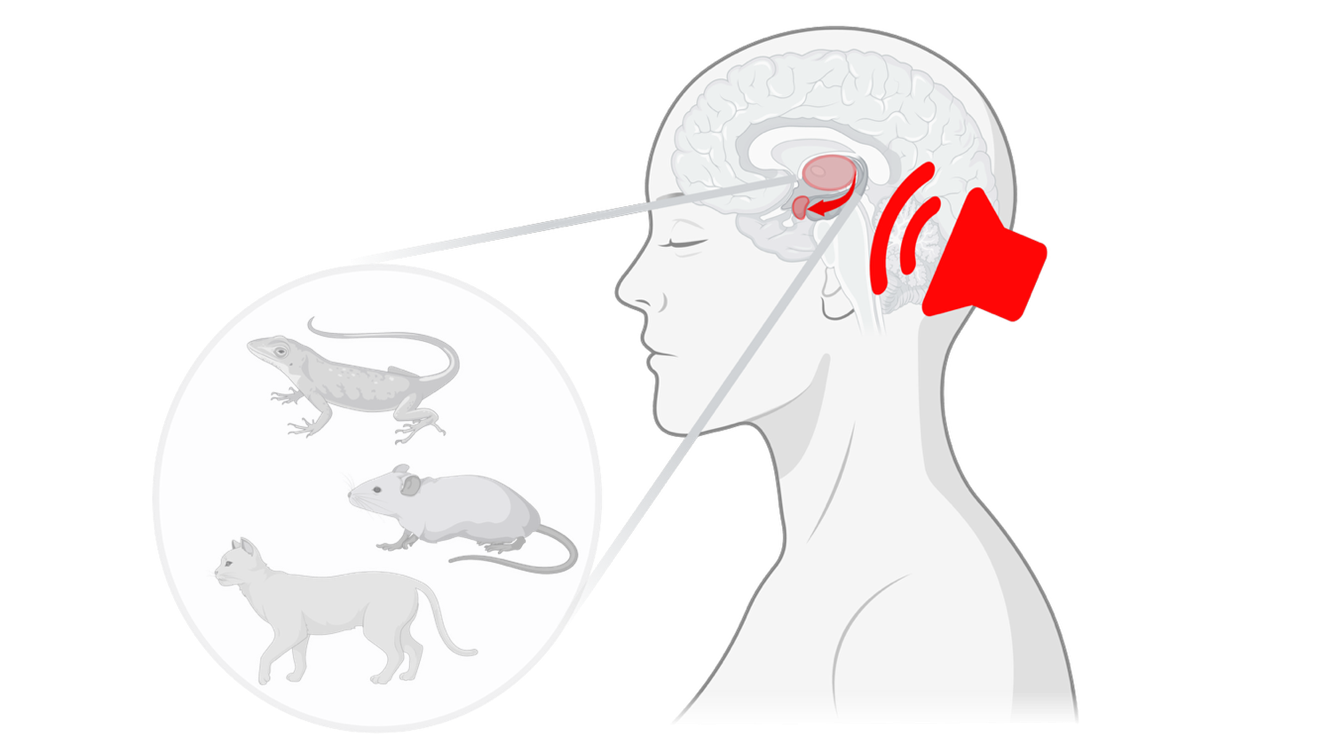
 A central focus of the project is the auditory modality, which has received little attention in humans. Sounds are especially well suited to signal danger, as they can originate outside our field of view, travel across long distances and physical obstacles, and often provide early indications of biologically relevant events. Beyond threat detection, they may also play a key role in affective communication between individuals. For many species, auditory signals are therefore crucial for detecting threats or socially relevant events. In non-human animals, research has long suggested the existence of relatively direct auditory projections linking subcortical auditory structures with the amygdala, but comparable evidence in humans has been limited.
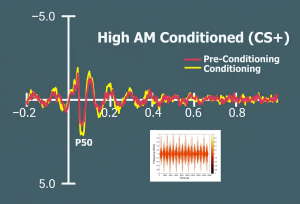
To address these questions, we combine complementary neuroimaging and physiological approaches that allow brain processes to be examined across multiple spatial and temporal scales. We seek to reveal how these subcortical shortcuts may facilitate the detection and evaluation of threatening information. Recent work within the project has begun to provide converging evidence supporting the existence of specialized subcortical connectivity in the human brain. For instance, structural connections linking midbrain auditory centers with the amygdala through thalamic relays appear to resemble circuits previously described in animal models.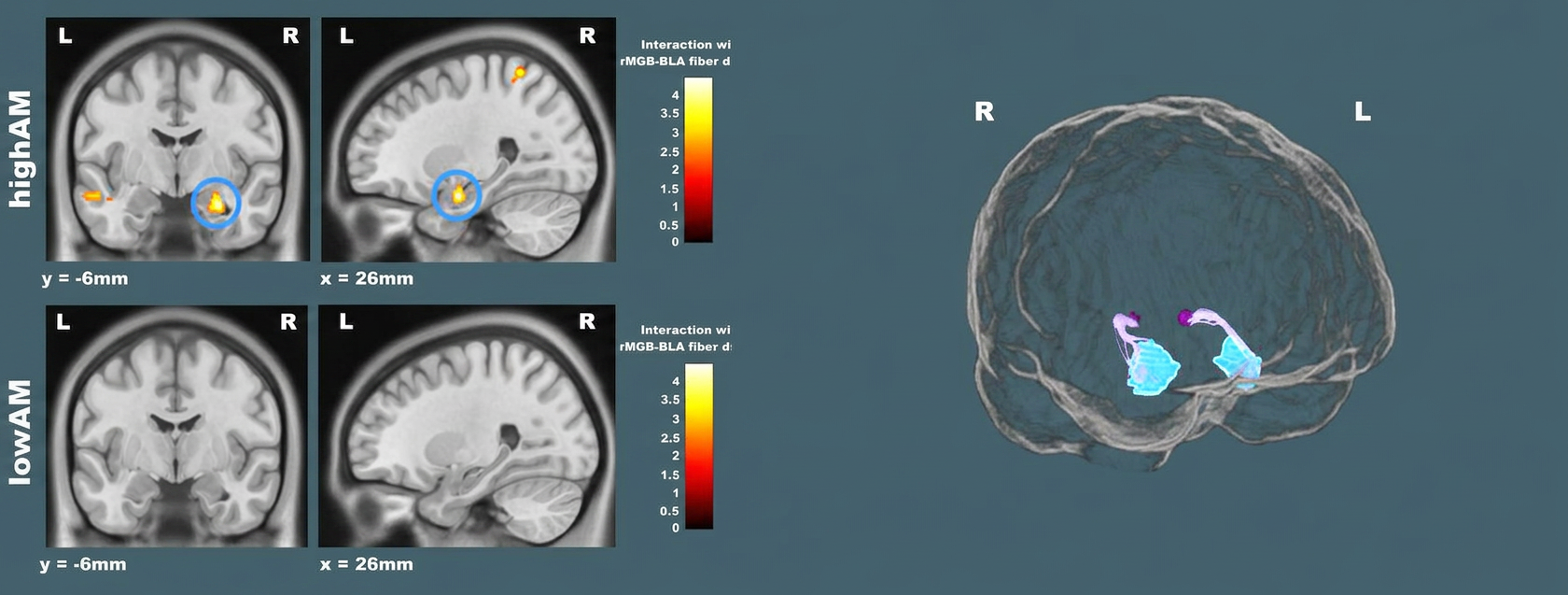
These pathways may provide rapid access for emotionally relevant sounds to subcortical affective systems. Importantly, specific properties of these pathways may relate to particular aspects of auditory perception and also to affective processing and individual traits. Ultimately, this project aims to advance our understanding of how the human brain evaluates emotion through phylogenetically ancient subcortical mechanisms, and how these may be involved in conditions related to emotional dysregulation or affective traits.