
Agriculture has always produced residues. Yet in the contemporary agri-food sector, the scale of organic waste is staggering: the European Union generates well over 430 million tonnes of lignocellulosic biomass annually, combining crop residues, orchard prunings and other sources (García-Condado et al., 2019; Dyjakon and García-Galindo, 2019). Traditionally, these by-products have been considered the unwanted result of food production. Limited or inefficient methods for the disposal or reuse of these by-products mean that they remain a vast and largely underutilised resource for bioenergy and bioproducts. Common practices such as on-field burning, composting without energy capture, or outright neglect, fail to make use of the energy and soil benefits these materials can provide.
By-product underutilisation persists despite the dual crises of rising fossil fuel dependency and soil degradation across Europe. To tackle the problem, the TEAPOTS project (Thermo-energetic Exploitation of Agricultural POtentials for Thermocomposting and biochar Systems) introduces a three-part strategy for the circular use of agricultural waste. It combines precision mapping of biomass, deployment of compost heat recovery systems (CHRS) and stakeholder-driven integration of thermocomposting and techniques to decompose organic material using high heat in the absence of oxygen (pyrolytic). The overarching objective is to transform scattered agricultural residues into local sources of renewable energy and soil-enhancing by-products.
Compost heat recovery systems (CHRS): a bio-thermochemical interface
The concept of capturing heat from composting is not a new one. Composting as an aerobic, exothermic degradation process has been documented to reach thermophilic temperatures exceeding 65°C. However, translating this technique into predictable, scalable thermal energy systems remains a technological challenge. Modern CHRS, often referred to as biomeilers, involve circulating water through tubing coiled within compost heaps, allowing heat to transfer from microbial activity to the water, which can then be used for domestic heating, greenhouse warming or other low-grade thermal applications. This simple concept belies the complexity of ensuring consistent, measurable output.
The TEAPOTS project places CHRS within a research and development framework, treating each installation as an experimental infrastructure subject to rigorous instrumentation and analysis. Collaboration between Stichting Biomeiler and Dutch research institutions, such as the University of Utrecht, enabled the construction and monitoring of multiple CHRS installations, including those at sites like Tolakker Farm. These systems use locally available feedstocks, including untreated wood chips, livestock manure and urban green waste.
Sensor-based monitoring architectures were developed to measure core parameters, including internal and peripheral temperature gradients, moisture content, airflow rate, calorific output and temporal stability. Data from these systems revealed complex thermodynamic behaviours within the compost mass, with heat production tightly coupled to microbial succession and feedstock structure. Preliminary findings indicate that optimal performance is achieved under conditions of layered feedstock structure, maintained porosity and regulated aeration. In contrast to theoretical maxima reported in literature (e.g. 4.3 MJ/kg dry matter), real-world outputs from TEAPOTS installations ranged between 0.34 and 0.98 MJ/kg dry matter, amounting to 1.7 to 4.3 MWh over a seasonal operational cycle (Smith et al., 2017). Crucially, TEAPOTS managed to extend thermophilic phases to durations exceeding six months, a significant milestone in biomeiler efficiency.
To address inter-installation variability, the project also developed standardised performance metrics per unit of dry mass and calorific input, contributing to the comparative analytics landscape. Moreover, the CHRS systems were subjected to iterative optimisation through real-time data feedback, including experiments with pump regulation algorithms to prevent overcooling. These results support the viability of CHRS as low-tech, decentralised thermal energy sources for rural or peri-urban applications, especially in off-grid contexts. Beyond energy, these systems contribute to nutrient cycling, organic matter retention and microbial diversity enhancement within the agroecosystem.
Socio-technical acceptance: farmer attitudes and adoption pathways
Beyond technical validation, TEAPOTS recognised the imperative of social embedding. Accordingly, extensive surveys were conducted by the Agricultural University of Athens in Germany, Greece and Italy, targeting farmers, cooperatives and agri-service providers. The surveys sought to assess existing waste management practices, attitudes toward decentralised energy solutions, and perceptions of the proposed TEAPOTS Integrated Solution (TIS). In total, more than 300 stakeholders contributed to the data collection effort, providing valuable regional insights into perceived opportunities and systemic barriers.
Key outcomes from respondents revealed a strong interest in both supply and adoption. Approximately 72% expressed interest in supplying biomass to TIS infrastructure, and 68% indicated potential adoption of on-site systems, conditional on subsidies or technical assistance. Farmers expressed notable enthusiasm for the potential agronomic benefits, such as improved soil fertility through compost or biochar return, and the possibility of new revenue streams. However, several barriers emerged: logistical constraints were cited by 42% of respondents, initial investment cost was identified as a challenge by 37%, and 29% highlighted a lack of operational know-how as a limiting factor. There was also concern regarding compatibility with existing waste collection systems and uncertainty about long-term system maintenance.
The surveys underscore the conditional readiness of end-users. While interest is robust, realising widespread adoption necessitates multi-level support structures, including financial incentives, training modules and cooperative-based ownership models. In this regard, TEAPOTS advocates for alignment with Common Agricultural Policy (CAP) instruments and rural development programmes. Local cooperatives were particularly identified as key intermediaries in aggregating biomass, operating shared infrastructure and facilitating knowledge exchange. These social ecosystems form the backbone of resilient bioeconomy transitions, enabling peer-to-peer learning and shared risk management.
Remote sensing and biomass modelling: from observation to prediction
Central to TEAPOTS is the development of high-resolution biomass estimation maps by our partners Uptoearth. Leveraging Sentinel-1 radar and Sentinel-2 multispectral satellite data, complemented by NASA’s GEDI LIDAR biomass datasets and Copernicus DEMs, the project constructed 10 m resolution maps over two pilot sites: 3500 hectares around the Ecofarm company located in Sicily, Italy, and 2000 hectares in the Filia Ghi, located in Thessaly, Greece. These maps were developed not as generic biomass inventories but as task-specific decision support tools, capable of informing feedstock logistics, techno-economic planning and system scaling.
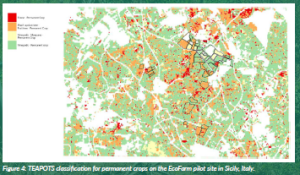
The project employed a random forest regression approach trained on empirical biomass measurements and literature-based benchmarks. In the Greek pilot, this yielded an R² of 0.81 and RMSE of 2.35 kg/m², affirming high predictive accuracy. The integration of radar and multispectral imagery enabled the accurate classification of crop types, delineation of field boundaries and segmentation of permanent from temporary vegetation. Biomass outputs were further disaggregated by crop type, allowing for specific estimates of residual biomass per vine or orchard tree. In Sicily, values ranged from 25.42 to 32.81 kg per plant, while in Thessaly, estimates ranged between 1.7 and 2.2 kg per plant.
These insights enable actionable logistics planning for biomass aggregation, collection timing and matching of supply with pyrolysis or CHRS capacity. Notably, TEAPOTS addressed data gaps caused by severe drought and satellite-obstructing vineyard covers by integrating historical pruning records, Albedo analysis and multi-temporal imaging. By using a multi-source calibration strategy, the TEAPOTS team demonstrated that robust biomass estimation is possible even under adverse conditions.
The mapping methodology is now being extended to virtual pilots in France, the Netherlands, Germany and northern Italy, particularly in cloud-prone regions. Here, the radar-based estimation models will prove indispensable. Ultimately, the biomass mapping framework supports both backward-looking assessment (residue quantification) and forward-looking planning (predictive yield modelling under climate variability). The implications extend beyond TEAPOTS: regional planners, energy cooperatives and agricultural extension services can now access spatialised data to design decentralised energy strategies rooted in local biomass availability. This spatial knowledge can also aid in carbon quantification, biodiversity monitoring and the improvement of environmental farming plans across large areas.
Toward an integrated valorisation model
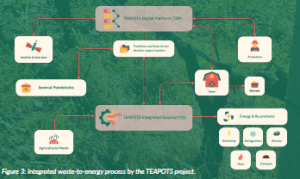
By combining spatial data analytics, CHRS experimentation and participatory research, TEAPOTS advances a new model for the valorisation of agricultural waste. The proposed TIS comprises a modular CHRS or pyrolysis unit, a local feedstock supply plan based on satellite-driven biomass maps and a distribution mechanism for biochar and compost by-products. Importantly, the system is not conceived as a one-size-fits-all package, but as a suite of modular components that can be adapted to diverse agronomic, climatic and socio-economic contexts.
Through this system, energy and agronomic outputs are retained locally, supporting both decarbonisation and regenerative farming. Compost improves soil structure and significantly boosts microbial activity by increasing microbial biomass, enzymatic functions and nutrient availability (Azeem et al., 2020; Akmal et al., 2019). Biochar enhances carbon sequestration and improves soil water retention and aggregation, with even greater benefits when combined with compost (Lee et al., 2021; Mikajlo et al., 2024; Dewi Erwinda et al., 2024). Moreover, the open-source nature of TEAPOTS protocols encourages replication and adaptation across varied agroecological zones. This open design philosophy aligns with broader movements toward local resilience, digital commons and climate-adaptive innovation. Integration with emerging digital farm management platforms could further enhance the operability and scalability of TIS.
Conclusion: cultivating renewable resilience
TEAPOTS illustrates how earth observation, ecological engineering and participatory innovation come together to tackle complex issues in European agriculture. By reimagining waste not as an endpoint but as a renewable resource in agro-energy systems, it opens pathways toward energy autonomy, soil restoration and climate resilience. The project contributes not only technical components, such as maps, sensors and compost heaters, but also social infrastructures of trust, collaboration and shared experimentation.
In the face of accelerating environmental pressures, such integrative and adaptive models are not merely desirable; they are essential. TEAPOTS offers both a conceptual framework and an empirical toolkit for realising this vision, one compost pile and one satellite pixel at a time.
Project partners
- SMACT Competence Center, Italy Agrimeccanica, Italy
- Danfoss, Denmark DGS, Germany Ecofarm, Italy
- Ente Regionale Per I Servizi All’ Agricultura E Alle Foreste (ERSAF), Italy Ethniko Kentro Erevnas Kai Technologikis Anaptyxis (CERTH), Greece Fenix TNT, Czech Republic
- Filia Ghi, Greece
- Geoponiko Panepistimion Athinon, Greece
- Laboratorio Iberico Internacional De Nanotecnologia (INL), Portugal and Spain
- STAM, Italy
- Stichting Biomeiler, Netherlands Thermodraft, Greece
- Universita Degli Studi Di Padova, Italy Uptoearth, Spain
- Wageningen University, Netherlands.
References
Akmal, M., Maqbool, Z., Khan, K.S., Hussain, Q., Ijaz, S.S., Iqbal, M., Aziz, I., Hussain, A., Abbas, M.S. and Rafa, H.U. (2019) ‘Integrated use of biochar and compost to improve soil microbial activity, nutrient availability, and plant growth in arid soil’, Arabian Journal of Geosciences, 12, 232. doi: 10.1007/s12517-019-4414-0.
Azeem, M., Hale, L., Montgomery, J., Crowley, D. and McGiffen, M. (2020) ‘Biochar and compost effects on soil microbial communities and nitrogen induced respiration in turfgrass soils’, PLoS ONE, 15(11). doi: 10.1371/journal.pone.0242209.
Dewi, T., Erwinda, Ardiwinata, A.N. and Hindersah, R. (2024) ‘The role of biochar and compost to mitigate agrochemical contamination impact on agricultural soils’, AIP Conference Proceedings, 2957, 100014. doi: 10.1063/5.0184114.
Dyjakon, A. and García-Galindo, D. (2019) ‘Implementing agricultural pruning to energy in Europe: Technical, economic and implementation potentials’, Energies, 12(8), 1513. doi: 10.3390/en12081513.
García-Condado, S., López-Lozano, R., Panarello, L., Cerrani, I., Nisini, L., Zucchini, A., Van der Velde, M. and Baruth, B. (2019) ‘Assessing lignocellulosic biomass production from crop residues in the European Union: Modelling, analysis of the current scenario and drivers of interannual variability’, Global Change Biology Bioenergy, 11, pp. 809–831. doi: 10.1111/gcbb.12604.
Lee, M.-H., Chang, E., Lee, C.-H., Chen, J.-Y. and Jien, S. (2021) ‘Effects of biochar on soil aggregation and distribution of organic carbon fractions in aggregates’, Processes, 9(8), 1431. doi: 10.3390/pr9081431.
Mikajlo, I., Lerch, T.Z., Louvel, B., Hynšt, J., Záhora, J. and Pourrut, B. (2024) ‘Composted biochar versus compost with biochar: effects on soil properties and plant growth’, Biochar, 6, 85. doi: 10.1007/s42773-024-00379-2.
Smith, M.M., Aber, J. D. and Rynk, R. (2016) ‘Heat recovery from composting: A comprehensive review of system design, recovery rate, and utilization’, Compost Science & Utilization, 25(sup1), S11–S22. doi: 10.1080/1065657X.2016.1233082.
Project summary
The EU-funded TEAPOTS project aims to provide agri-food actors with a revolutionary solution to help them sustainably meet seasonal energy demands by utilising lignocellulosic and difficult-to-treat agricultural waste. The project will introduce and valorise two processes: pyrolysis and a compost heat recovery system for the extraction of heat. Overall, these technologies will produce compost, provide refrigeration and help maintain soil yields.
Project lead profile
Raffaele Catoni, Project Manager at SMACT Competence Center, coordinates the TEAPOTS project with a strong background in managing complex, multi-stakeholder initiatives. With previous roles in social innovation and European project development, he brings expertise in steering projects that merge technology, public engagement and societal impact. Holding advanced degrees in applied cognitive psychology from the University of Padua, Raffaele combines strategic oversight with a people-centred approach, ensuring TEAPOTS meets both its technical and community-focused goals.
Project contacts
Ivana Kolackova
Email: ivana.kolackova@fenixtnt.cz
Web: www.teapots-project.eu/
LinkedIn: /teapotsproject
Instagram: /teapotsproject/
YouTube: @teapotsproject
Zenodo: /communities/101118296
Sign up for the TEAPOST Newsletter via LinkedIn: https://www.linkedin.com/build-relation/newsletter-follow?entityUrn=7280489134387826688
Funding
Funded by the European Union under grant agreement no. 101118296. Views and opinions expressed are, however, those of the author(s) only and do not necessarily reflect those of the European Union or CINEA. Neither the European Union nor the granting authority can be held responsible for them.
Figure legends
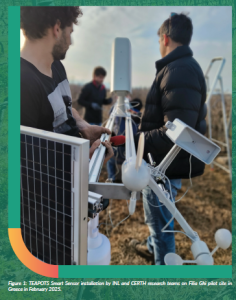
Figure 1: TEAPOTS Smart Sensor installation by INL and CERTH research teams on Filia Ghi pilot site in Greece in February 2025.
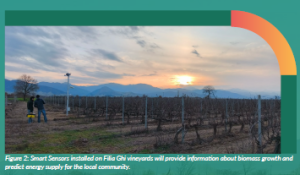
Figure 2: Smart Sensors installed on Filia Ghi vineyards will provide information about biomass growth and predict energy supply for local community.
Figure 3: Integrated waste-to-energy process by the TEAPOTS project.
Figure 4: TEAPOTS classification for permanent crops on the EcoFarm pilot site in Sicily, Italy.