
Rangelands represent some of the most valuable and multifunctional landscapes in Europe. Covering extensive areas across mountain regions, grasslands, Mediterranean wood pastures, heathlands, and semi-natural ecosystems, these territories provide critical ecosystem services while supporting extensive livestock farming systems.
Sheep, goats, and cattle grazing systems play an essential role in maintaining biodiversity, preventing wildfires, preserving cultural landscapes, and sustaining rural economies. However, these systems are increasingly exposed to economic, environmental, and social pressures, including climate change, land abandonment, labour shortages, market instability, and demographic decline in rural regions.
Extensive livestock farming in rangelands differs significantly from intensive agricultural systems. Farmers often manage large territories under challenging geographical and climatic conditions, where livestock mobility, access to grazing resources, water availability, and predator management constitute daily operational concerns. In many regions, rangeland farming is not only an economic activity but also a key mechanism for landscape conservation and territorial cohesion. Nevertheless, these systems remain vulnerable due to low profitability, limited technological uptake, fragmented infrastructure, and reduced access to tailored advisory services.
Against this backdrop, digital technologies are increasingly recognised as an opportunity to improve the sustainability, resilience, and viability of rangeland farming systems. Yet, the digital transition of extensive livestock farming faces considerable barriers, including limited connectivity in remote areas, lack of adapted technological solutions, low digital literacy, and the insufficient integration of farmers’ practical knowledge into innovation processes. Addressing these challenges requires collaborative approaches capable of connecting farmers, researchers, advisers, technology developers, policymakers, and other territorial actors.
The European project DIGI-Rangeland, DIGItal innovation and data technology network for RANGELAND livestock farming systems, was initiated in February 2025 precisely to respond to these needs. Funded under the Horizon Europe framework, the project seeks to accelerate the adoption of digital technologies and innovations (DTI) solutions. Adapted to the realities of extensive livestock farming systems while strengthening knowledge exchange among stakeholders. DIGI-Rangeland adopts a multi-actor approach, recognising that innovation in rangelands cannot be imposed through top-down technological transfer alone, but rather must emerge from collaboration between scientific expertise and local knowledge.
The project focuses on understanding the challenges faced by livestock farmers and other land users operating in rangeland territories while identifying DTI solutions capable of supporting more informed decision-making. Importantly, DIGI-Rangeland does not view digitalisation as an objective in itself, but as a practical tool for improving sustainability, reducing management burdens, strengthening resilience to climate variability, and supporting the multifunctionality of rural territories.
Through a broad European network involving 11 countries and a wide range of regional ecosystems, DIGI-Rangeland helps bridge the gap between technological development and practical implementation. In doing so, the project positions digital innovation as a means to support environmentally sustainable and socially resilient farming systems while safeguarding the ecological and cultural value of Europe’s rangelands.
Supporting farmers and multifunctional Rangeland users
The management of livestock in rangeland territories presents unique operational complexities. Farmers working in extensive systems often face highly variable environmental conditions, dispersed grazing areas, labour shortages, increasing production costs, and uncertainty linked to climate change. Daily activities such as monitoring animal movements, assessing pasture conditions, ensuring animal health, protecting herds from predators, and co-ordinating grazing management require substantial time and resources. These challenges are further intensified by extreme weather events, water scarcity, and growing competition between different land uses.
In this context, digital technologies offer significant opportunities to support livestock farmers in their day-to-day activities. Precision livestock farming tools, GPS tracking systems, sensors, remote sensing technologies, drones, virtual fencing, and mobile applications are increasingly being explored as mechanisms to facilitate herd and flock management and improve productivity while reducing labour intensity. For example, GPS collars and geolocation systems can help farmers monitor grazing patterns and livestock location across large and remote territories.
Digital technologies also contribute to improving animal welfare and farm management efficiency. Early warning systems based on sensors may help detect animal health problems, unusual behaviours, or environmental stress, enabling preventive interventions. In territories increasingly exposed to drought and environmental uncertainty, such technologies may play a key role in improving adaptive capacity.
However, rangelands are multifunctional territories shared by multiple stakeholders beyond livestock farmers. Forestry managers, biodiversity conservation actors, agrotourism businesses, local administrations, hunters, recreational users, and rural communities all interact within these landscapes. Consequently, digital innovation in rangelands must also support coexistence between different land uses and improve territorial governance.
For example, digital mapping tools and geospatial platforms may facilitate the co-ordination of grazing activities with tourism infrastructure, biodiversity protection areas, or wildfire prevention strategies. Agrotourism operators may benefit from digital tools promoting visitor engagement, educational experiences, and sustainable territorial branding linked to pastoral systems and traditional farming practices. Local authorities can also use territorial data platforms to improve land planning and support ecosystem-based management approaches.
Despite these opportunities, technological adoption remains uneven across regions and farming systems. Farmers frequently report concerns related to costs, usability, lack of technical support, insufficient training, and uncertainty regarding the practical added value of digital tools. Therefore, innovation alone cannot solve structural challenges unless accompanied by participatory approaches, capacity building, and stronger collaboration among stakeholders.
DIGI-Rangeland addresses these challenges by placing end-users at the centre of the innovation process. Rather than promoting technologies without contextual understanding, the project seeks to identify practical needs, understand barriers to adoption, and foster dialogue. By doing so, the project helps ensure that digitalisation becomes accessible, useful, and adapted to the everyday realities of rangeland management.
Building a European Rural-AKIS network: demonstrations, knowledge exchange, and digital uptake
A distinctive feature of DIGI-Rangeland lies in its ambition to establish a strong European network for knowledge exchange and innovation uptake across rangeland territories. Recognising that successful digital transformation depends not only on technology availability but also on learning processes and collaboration, the project operates through a Rural Agricultural Knowledge and Innovation Systems (AKIS) perspective.
The AKIS framework emphasises interactions between farmers, advisers, researchers, educational institutions, policymakers, businesses, and civil society organisations in fostering agricultural innovation. Within DIGI-Rangeland, this perspective enables the creation of a participatory ecosystem where DTI solutions are identified, discussed, adapted, and demonstrated according to local realities and territorial priorities.
The project spans multiple European countries, including France, Romania, Greece, Spain, Croatia, Slovenia, Bulgaria, Iceland, Norway, the United Kingdom, and Switzerland, reflecting the diversity of rangeland systems across climatic, cultural, and socio-economic contexts. Such diversity constitutes both a challenge and an opportunity, as solutions effective in one region may require adaptation before implementation elsewhere. To address this complexity, DIGI-Rangeland places strong emphasis on stakeholder engagement processes and transnational exchange.
Transnational and national workshops play a central role in the project methodology. These workshops serve as spaces for identifying needs, collecting experiences, and fostering dialogue among livestock farmers, advisers, researchers, technology providers, and other land users. Through participatory discussions, stakeholders are encouraged to reflect on current management challenges and jointly identify digital solutions with practical relevance for their territories.
Importantly, the project does not stop at needs assessment. Following the identification and exchange phases, DIGI-Rangeland advances towards demonstration activities designed to showcase the practical functioning of digital technologies in real-life contexts. Demonstration farms and pilot experiences allow stakeholders to observe how digital tools may operate under actual farming conditions, reducing uncertainty and facilitating peer learning processes.
This demonstration-based approach is particularly important for extensive livestock systems, where farmers often rely heavily on experiential knowledge and trust-based learning networks. Seeing technologies applied under realistic conditions, and hearing directly from peers who have tested them, can significantly improve confidence and willingness to adopt innovation.
At the same time, the project strengthens European collaboration by facilitating exchanges between countries facing similar challenges despite differing territorial realities. Through cross-border learning, DIGI-Rangeland contributes to building a stronger community of practice capable of sharing solutions, lessons learned, and innovation pathways.
Ultimately, DIGI-Rangeland illustrates how digitalisation in agriculture should be approached not merely as technological deployment but as a social and collaborative process. By combining stakeholder engagement, knowledge exchange, demonstrations, and AKIS-based learning, the project seeks to accelerate the responsible uptake of digital solutions that can strengthen the resilience, sustainability, and long-term viability of Europe’s rangeland farming systems.
Project summary
DIGI-Rangeland seeks to create an innovative network focused on digital technologies and data solutions tailored for farmers and land users in rangeland areas. Using a multi-actor approach in 10 countries, the project facilitates knowledge sharing among EU stakeholders and fosters collaboration on digital innovation. By identifying the needs and barriers faced by practitioners, the project evaluates and promotes effective digital solutions to ensure the resilience and sustainability of rangeland livestock farming systems across Europe.
Project partners
Project co-ordinator: IDELE (France). Partners: AGRO (France), ADEPT (Romania), DUTH (Greece), FEUGA (Spain), USC (Spain), SEASN (Croatia), CAFS (Slovenia), STEP (Bulgaria), LBHI (Iceland), NIBIO (Norway), SRUC (United Kingdom) & AGRIDEA (Switzerland).
Project lead profile
Germain Tesnière is Project Manager at IDELE – The French Livestock Institute, where he leads regional, national, and European projects focused on digital technologies and innovation for sheep, goat, and cattle sectors. An agronomy engineer with a PhD in management sciences, his expertise combines livestock systems, innovation, and socio-technical approaches. He currently co-ordinates the European DIGI-Rangeland project.
Project contacts
Germain Tesnière (IDELE) – DIGI-Rangeland Co-ordinator
Email: germain.tesniere@idele.fr
LinkedIn: /in/germain-t-0b218587
Eva Pérez Vidal (FEUGA) – Communication Leader
Email: eperez@feuga.es
LinkedIn: /in/evaperezvidal
Funding
This project has received funding from the European Research Council (ERC) under the European Union’s research and innovation programme (Grant agreement No. 101183132).
Views and opinions expressed are, however, those of the author(s) only and do not necessarily reflect those of the European Union or the ERC. Neither the European Union nor the granting authority can be held responsible for them.
Figure legends
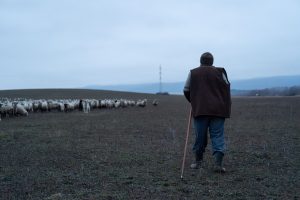
Figure 1: Romanian shepherd.
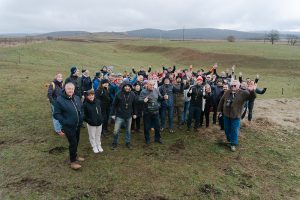
Figure 2: DIGI-Rangeland Team 2026.