
From alternative proteins to market-ready solutions: major progress achieved in the third year of CIPROMED.
Loizos Georgiou, RTD Talos Ltd
The global demand for sustainable protein sources continues to grow as agriculture and food systems face increasing pressure from climate change, resource scarcity, and volatile international supply chains. Although conventional protein sources such as soybean meal remain widely available and cost-competitive, their production is associated with significant environmental challenges and a heavy reliance on imports in many Mediterranean countries. At the same time, consumers are increasingly seeking healthier and more sustainable food options.
To address these challenges, the PRIMA-funded project CIPROMED (Circular and Inclusive Utilisation of Alternative Proteins in Mediterranean Value Chains) is developing innovative solutions that integrate insect proteins, microalgae, legumes, and circular bio-based resources into food and feed systems across the Mediterranean region.
As the project enters its final phase, significant achievements have already been delivered, demonstrating the technical feasibility, sustainability, and market potential of alternative protein value chains.
Key achievements delivered so far
During its third year, CIPROMED achieved significant progress across the entire alternative protein value chain. The project developed innovative protein ingredients from insects, microalgae, and legumes, successfully valorised agricultural and food-processing sidestreams within a circular economy framework, and formulated next-generation aquafeeds and poultry feeds. Researchers also created 12 high-protein food prototypes, while consumer studies involving more than 3000 participants across 6 countries provided valuable insights into market acceptance. In parallel, promising business opportunities were identified for industrial partners, bringing the project’s innovations closer to market uptake and contributing to more resilient and sustainable Mediterranean food systems.
Unlocking new protein sources through advanced extraction technologies
A major breakthrough achieved by CIPROMED is the development of innovative technologies capable of transforming alternative biological resources into high-value protein ingredients. By combining advanced extraction and enrichment techniques, researchers have successfully recovered proteins from legumes, insects, and microalgae and converted them into functional ingredients suitable for food and feed applications. The resulting protein concentrates are already being used in the formulation of next-generation aquafeeds, poultry feeds and high-protein food products, bringing the project one step closer to commercial implementation.
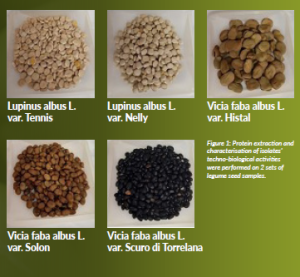
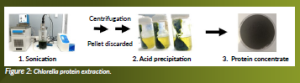
CIPROMED researchers successfully produced high-protein concentrates from faba beans, lupins, and Chlorella vulgaris microalgae. Legume-derived protein isolates demonstrated protein contents exceeding 70 %, while microalgae cultivation and extraction processes achieved protein-rich concentrates suitable for both food and feed applications. Moreover, detailed analyses of legume protein hydrolysates obtained after protease digestion of total protein isolates identified bioactive peptides with antioxidant and potential health-promoting properties, opening opportunities for future functional food applications.
Safety assessments have also generated encouraging results, with protein extracts showing low levels of biogenic amines and no major safety concerns identified to date.
Innovative feed solutions validated in aquaculture and poultry production
CIPROMED has successfully transformed these alternative protein ingredients into practical feed solutions for both aquaculture and poultry sectors.
Novel aquafeeds incorporating black soldier fly meal and microalgae as circular protein ingredients were formulated for Mediterranean aquaculture species including European seabass, gilthead seabream, and rainbow trout. Extensive digestibility and growth trials demonstrated that alternative proteins can successfully replace conventional ingredients without negatively affecting growth performance, feed conversion efficiency, or fish health.
The project also developed innovative poultry diets based on black soldier fly meal and hydrolysed wheat gluten. These formulations achieved significant soybean meal replacement rates while maintaining excellent nutritional quality. Digestibility trials have been completed, and large-scale broiler trials were finalised in May 2026, providing valuable data for future commercial implementation.
Beyond biological validation, CIPROMED partners have begun integrating predictive digital tools such as FEEDNETICS, to support feed formulation optimisation and facilitate the transfer of project results towards industrial applications.
New high-protein food products meeting consumer expectations
Food innovation represents another key pillar of the project.
Researchers and industrial project partners have developed 12 high-protein food prototypes using insect, legume, and microalgae proteins. These include bakery products, meat alternatives, hybrid meat products, and protein-enriched formulations designed to respond to growing consumer demand for sustainable nutrition.
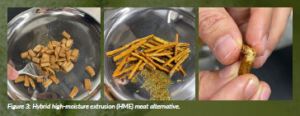
Particularly promising results have been achieved in the development of hybrid and plant-based meat analogues. Through advanced high-moisture extrusion technologies, researchers successfully created fibrous meat-like structures using alternative proteins of the project while reducing dependence on conventional soy ingredients.
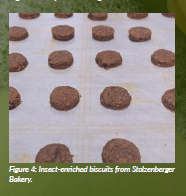
At the same time, Stolzenberger Bakery has successfully incorporated insect, hemp, and legume proteins into traditional bakery products. Consumer tastings conducted during international events such as INSECTA 2024 and Insects Plus 2025 involved more than 350 participants and provided valuable feedback for product optimisation and future commercialisation.
Sensory analyses performed by specialised panels revealed that protein-enriched bakery products maintain attractive texture, flavour, and appearance characteristics while significantly increasing nutritional value.
Understanding consumer acceptance across Europe and the Mediterranean
Consumer acceptance remains one of the critical success factors for alternative proteins.
To better understand public perceptions, CIPROMED conducted one of the largest consumer studies within the project domain. More than 3000 consumers across 6 countries participated in an online survey, while 18 focus groups involving 124 participants from all partner countries explored attitudes towards insect proteins, microalgae-based foods, and sustainable protein products. A home use test was conducted in Germany, Italy, and Spain, in which 135 participants evaluated 2 newly developed pea-based protein alternatives in a Bolognese.
Preliminary findings indicate growing openness towards alternative proteins, particularly when incorporated into familiar food formats such as burgers, bakery products, and ready-to-eat meals. The studies also revealed that transparency, sustainability information, and product familiarity play crucial roles in influencing consumers’ willingness to try and purchase these products.
These insights will support future product development strategies and market introduction activities.
Sustainability and circularity at the core
Beyond technical performance, CIPROMED continues to evaluate the broader sustainability impacts of alternative protein production.
A comprehensive social life-cycle assessment assessed insect protein production systems across Europe and North Africa. The results demonstrated that social sustainability performance is strongly influenced by both regional socio-economic conditions and technological efficiency. The study also highlighted the importance of robust governance frameworks and circular production systems in achieving balanced sustainability outcomes.
As the sustainability study progressed, all the data were integrated to develop a decision-support tool that provides optimised results for the protein chain based on the user’s goals.
Furthermore, the project has demonstrated the successful valorisation of agricultural and food-processing sidestreams, including dairy waste and insect-derived residues, contributing to circular economy objectives and resource efficiency throughout the value chain.
Effects on satiety and on metabolic health
CIPROMED is currently assessing in Italian volunteers the effects of protein-enriched breads made from legume, hemp, algae, and cricket flour on satiety, food preference, and craving, comparing them with a wheat flour control bread. At the same time, an ongoing chronic study is testing the effects of the regular consumption of cricket-based protein bread (Acheta domesticus) and spirulina algae burgers, within the context of a Mediterranean diet, comparing them with isoenergetic alternatives based on legumes and fish. The effects being tested are metabolic profile, gastrointestinal tolerability, body weight, liver fat content, inflammatory markers, gut microbiota, and psychometric parameters. The studies will provide an integrated assessment of the metabolic, physiological, microbiota-related, and psychological effects of alternative proteins, thereby supporting sustainable, clinically applicable dietary strategies.
Building the path towards commercialisation
As CIPROMED approaches its final year, several industrial partners have already developed preliminary business cases to commercialise project innovations. These include insect-based protein production systems, microalgae-derived protein ingredients, and high-protein food products targeting rapidly growing food, feed, and nutraceutical markets.
The project also supports industrial uptake through market assessments, business planning activities, and stakeholder engagement initiatives to accelerate the transition from research results to commercial solutions.
Looking ahead
With most scientific and technological objectives already achieved, CIPROMED is now focused on completing final validation activities, strengthening business cases, and preparing the market uptake of its key exploitable results.
The project demonstrates that alternative proteins derived from insects, microalgae, and legumes can successfully contribute to more resilient, sustainable, and circular food and feed systems. By combining scientific excellence, industrial participation, and consumer engagement, CIPROMED is helping pave the way towards a more sustainable protein future for the Mediterranean region and beyond.
Project name
CIPROMED (Circular and Inclusive Utilisation of Alternative Proteins in the Mediterranean Value Chains)
Project summary
CIPROMED strengthens Mediterranean agri-food resilience by valorising local crops, agri-industrial residues, and alternative proteins from insects, legumes, microalgae, and fermentation. Using circular, sustainable processes, it transforms sidestreams into high-value food and feed ingredients, enriches soils with insect frass, and applies microbial fermentation to enhance protein quality, supporting a resource-efficient, climate-smart agri-food system.
Project partners
CIPROMED strengthens Mediterranean agri-food resilience by valorising local crops, agri-industrial residues, and alternative proteins from insects, legumes, microalgae, and fermentation. Using circular, sustainable processes, it transforms sidestreams into high-value food and feed ingredients, enriches soils with insect frass, and applies microbial fermentation to enhance protein quality, supporting a resource-efficient, climate-smart agri-food system.
Project lead profile
The University of Thessaly (UTH), with 37 departments and 39 000 students, co-ordinates CIPROMED. Its Laboratory of Entomology and Agricultural Zoology (LEAZ) excels in insect rearing for feed, while AquaLab advances sustainable aquaculture nutrition. With cutting-edge facilities, extensive insect collections, and global research collaborations, UTH provides leading expertise in alternative proteins and entomology.
Project contacts
Project Co-ordinator: Christos Athanassiou, Professor of Entomology, UTH
Email: athanassiou@uth.gr
Web: cipromed-project.com
LinkedIn: /showcase/cipromed-project
X: @cipromedproject
Funding
The PRIMA programme is supported and funded under Horizon 2020, the Framework European Union’s Programme for Research and Innovation. Grant agreement No.: 2231 [CIPROMED] [Call 2022 Section 1 Agri-food IA].
Views and opinions expressed are, however, those of the author(s) only and do not necessarily reflect those of the European Union. Neither the European Union nor the granting authorities can be held responsible for them.
Article co-ordinated and written by RTD-TALOS on behalf of CIPROMED.
Figure legends
Figure 1: Protein extraction and characterisation of isolates’ techno-biological activities were performed on 2 sets of legume seeds.
Figure 2: Chlorella protein extraction.
Figure 3: Hybrid high-moisture extrusion (HME) meat alternative.
Figure 4: Insect-enriched biscuits from Stolzenberger Bakery.
| Figure 1: Protein extraction and |