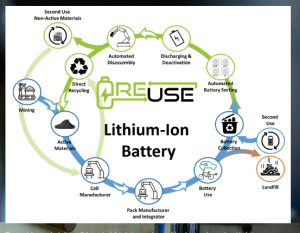

Lithium iron phosphate (LFP) battery chemistry is dominating Europe’s stationary storage and mass-market electric vehicle sectors due to its exceptional thermal stability, extended lifecycles, and cobalt-free supply chain.
This rapid commercial success introduces a severe recycling bottleneck. Existing infrastructure was engineered for high-nickel chemistries like nickel manganese cobalt (NMC), where valuable recovered metals naturally offset high processing costs. Because LFP relies on low-cost iron and phosphate, traditional recycling is economically unviable just as massive waves of factory scrap and end-of-life cells enter the market.
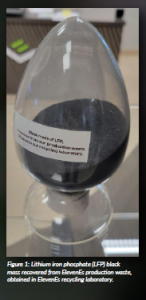
Shredding these cells yields ‘black mass’, a stable powder containing LFP, carbon black, and anode graphite. Traditional pyrometallurgical smelting is a dead end for this material, trapping critical lithium within unrecoverable slag while burning off graphite. Meanwhile, standard hydrometallurgical leaching treats graphite, an EU critical raw material making up 15 % to 20 % of cell weight, as an impurity, discarding or incinerating it. Furthermore, resilient polyvinylidene fluoride (PVDF) binders cross-contaminate the black mass with metallic fragments, ruining downstream chemical purity and necessitating a dedicated, low-emission recovery pathway.
The ReUse process and empirical proof
To bypass these hurdles, Europe’s ReUse project is pioneering a direct recycling method that combines low-temperature thermal conditioning with advanced mechanical sorting. The process begins with targeted pyrolysis between 300°C and 500°C, which fractures the molecular chains of the PVDF binder without altering the underlying LFP crystal structure. Fine sieving, air classification, and density separation then trigger efficient delamination. Active LFP cathode and graphite anode powders detach effortlessly, leaving copper and aluminium current collectors isolated as pristine, high-purity metallic fractions, while the remaining powder splits into concentrated LFP and clean graphite streams (Figure 1).
The technical pathway: advanced mechanical and thermal separation
To resolve this bottleneck, Europe’s ReUse project is pioneering a direct recycling method that exploits the differing physical and thermal tolerances of battery components, completely bypassing the need for harsh chemical acids or high-heat smelting.
The process begins with low-temperature thermal conditioning, where black mass or intact electrode foils undergo targeted pyrolysis between 300 °C and 500 °C. This thermal window fractures the molecular chains of the PVDF binder without oxidising the metals or altering the underlying LFP crystal structure, cleanly liberating the active materials. From there, the material moves directly into advanced mechanical separation. By utilising a calculated combination of fine sieving, air classification, and density separation, the system triggers a highly effective delamination effect. The active LFP cathode powder and graphite anode powder detach effortlessly from their backing, leaving the copper and aluminium current collectors to be isolated as pristine, high-purity metallic fractions.
The remaining powder is then split into a concentrated lithium-iron-phosphate blend and a separate, clean graphite stream. Because this sequence avoids dissolving the active components into a complex chemical solution, the structural integrity of the LFP olivine crystal matrix remains preserved. This opens the door to direct regeneration and re-lithiating, upcycling the recovered LFP back into battery-grade materials using only a fraction of the energy required by standard hydrometallurgy.
European LFP manufacturer ElevenEs validated this sequence using factory scrap in lab trials up to 1 kg, achieving lithium, aluminium, copper, iron, and phosphorus recovery rates exceeding 95 %. To prove commercial scalability under real-world factory pressures, ElevenEs partnered with global recycling companies to transition to production-scale runs. These ongoing industrial trials handle hundreds of tonnes of complex, real-world mixtures containing both production waste and degraded end-of-life cells, targeting up to 90 % recovery for lithium, iron, and phosphorus, and over 80 % for copper and aluminium.
Table 1: Recycling targets and achievements.
| Processing Scale | Target Materials | Input Stream Composition | Validated Material Recovery Rate |
| Lab Scale (Up to 1 kg) | Li | Production Waste / Scrap | > 95% (proven) |
| Al, Cu, Fe, P | > 95% (outperforming Li) | ||
| Production Scale | Li, Fe, P | Mixed (Production Waste + EoL Cells) | up to 90% (next step) |
| Al, Cu | to exceed 80% (next step) |
Commercial viability and strategic autonomy
The mechanical-thermal pathway turns LFP recycling into a genuinely profitable business strategy by shifting away from chemical-heavy hydrometallurgy. Bypassing massive volumes of strong acids and neutralising agents drastically reduces chemical procurement costs and downstream waste fees. Operating with a clean, dry footprint eliminates contaminated wastewater processing and simplifies environmental permitting with local regulators.
The primary financial breakthrough lies in the simultaneous recovery of 2 critical raw materials. Instead of burning off the anode, precise mechanical separation isolates both battery-grade lithium compounds and high-purity graphite, generating 2 distinct, high-value revenue streams from a single waste batch.
As the European Union tightens domestic sourcing laws through the Critical Raw Materials Act, the ReUse project provides an essential industrial blueprint. Successfully scaling this process transforms an unprofitable legal headache into a secure, domestic, and highly efficient closed loop for European battery materials.
Bibliography
ElevenEs (2025) ‘ElevenEs signed new Global Memorandum of Understanding to Revolutionize LFP Battery Recycling with Leading International Partners’. Available at: https://elevenes.com/news/global-memorandum-of-understanding-to-revolutionize-lfp-battery-recycling-with-leading-international-partners/.
European Parliament and Council (2023) Regulation (EU) 2023/1542 of the European Parliament and of the Council of 12 July 2023 concerning batteries and waste batteries, amending Directive 2008/98/EC and Regulation (EU) 2019/1020 and repealing Directive 2006/66/EC. Official Journal of the European Union, L 191, pp. 1–117.
European Parliament and Council (2024) Regulation (EU) 2024/1252 of the European Parliament and of the Council of 11 April 2024 establishing a framework for ensuring a secure and sustainable supply of critical raw materials and amending Regulations (EU) No 168/2013, (EU) 2018/858, (EU) 2018/1724 and (EU) 2019/1020. Official Journal of the European Union, L series, 2024/1252.
Liu, J. et al. (2026) ‘Direct recycling of lithium-ion battery materials: separation and regeneration’, Journal of Materials Chemistry A, 14(35), pp. 22822–22858. Available at: https://doi.org/10.1039/D6TA01248E.
Wu, Z. et al. (2021) ‘Recycling of electrode materials from spent lithium-ion power batteries via thermal and mechanical treatments’, Waste Management & Research, 39(4), pp. 607–619. Available at: https://doi.org/10.1177/0734242X20969803.
Project summary
ReUse: Efficient Direct Recycling for Low-Value LFP Battery for Circular and Sustainable Waste Management
The ReUse project is a Horizon Europe-funded research initiative focused on improving the circularity and sustainability of the European Lithium-ion battery value chain. It aims to revolutionise low-value lithium iron phosphate (LFP) battery waste management by developing efficient, direct recycling technologies that maximise material recovery and purity from both production scrap and end-of-life batteries.
Project lead profile
Dr Claudia Stauch is an experienced scientist and project manager at Fraunhofer ISC with over a decade of expertise in leading international R&D programmes focused on circular materials and sustainable technologies. Currently serving as a Senior Project Manager, she bridges technical excellence with industrial impact by coordinating large-scale Horizon Europe consortia, including the ReUse project.
Project contacts
Senior Project Manager: Dr Claudia Stauch
LinkedIn: /in/claudia-stauch-39ab38249/
Cell Materials Manager: Aleksandra Roganovic
Email: aleksandra.roganovic@elevenes.com
Web: reuse-batteries.eu
LinkedIn: /company/reuse-batteries
YouTube: @reuse-batterie
Zenodo: /communities/reuse-project/records?q=&l=list&p=1&s=10
CORDIS: https://cordis.europa.eu/project/id/101137774
LinkedIn newsletter: /build-relation/newsletter-follow?enti tyUrn=7279401028045737984
Funding
Co-funded by the European Union under Grant Agreement No. 101137774 and the State Secretariat for Education, Research, and Innovation (SERI).
Views and opinions expressed are, however, those of the author(s) only and do not necessarily reflect those of the European Union or CINEA. Neither the European Union nor the granting authority can be held responsible for them.
Figure legends
Figure 1: Lithium iron phosphate (LFP) black mass recovered from ElevenEs production waste, obtained in ElevenEs recycling laboratory.