
We pay for food twice. First at the till, then again through the consequences that never appear on the receipt: rising healthcare burdens linked to diets, biodiversity losses, greenhouse gas emissions, depleted soils, and social harms embedded in complex supply chains.
What if these impacts were measured consistently, valued credibly, and then used by governments and businesses alike to steer decisions towards healthier, fairer, and more sustainable food systems?
Introducing FOODCoST
FOODCoST is a Horizon Europe project running for 4 years, ending in May 2026, financed by the EU and coordinated by Wageningen Research. The project has an ambitious mission: to advance external costs valuation methods and databases that enable decision-makers to develop effective policy and business pathways and to provide evidence that holds up across real-world contexts.
FOODCoST does not treat ‘true cost accounting’ as an abstract academic exercise. Therefore, the project is built around a stakeholder platform and a multi-actor approach, designed to keep methods grounded in the decisions people actually make, within ministries, municipalities, boardrooms, procurement offices, and value chain partnerships.
Our objective: turning externalities into decisions that change outcomes
FOODCoST’s long-term goal is not simply to compute external costs, but to make them usable for:
- policymakers, to test and compare internalisation instruments (e.g. taxes, subsidies, regulations, VAT design) and anticipate trade-offs and distributional impacts
- businesses, to evaluate value chain strategies and business models that can reduce harms (and capture benefits) while remaining feasible in competitive markets
- the wider food system, to support a transition where healthier and more sustainable options are not structurally disadvantaged by today’s pricing signals.
https://youtu.be/Ob8Gw_vpdvQ?si=QuzrjUzsr5it3m1xvQ?si=QuzrjUzs-r5it3m1x
Video: FOODCoST in a Nutshell.
The FOODCoST methodology: 1 stakeholder platform, 3 pillars, 1 integrated logic
FOODCoST organises its work through a stakeholder platform that supports 3 connected pillars: valuation, internalisation, and impact. By organising the work this way, the journey from calculating a hidden cost to taking decisive action is a clear, mapped-out reality rather than just a hopeful assumption.
1) Valuation pillar: a harmonised way to calculate external costs and benefits
Measuring and monetising externalities becomes policy- and market-relevant only when the method is consistent, transparent, and comparable across contexts. FOODCoST’s valuation work focuses on documenting available valuation methods, life cycle assessment and pricing databases, and developing a guideline for the use of various methods, distinguishing between damage costs and abatement costs, their advantages and disadvantages, and further developing a consistent valuation approach grounded in the marginal cost principle.
Key outputs are:
- the FOODCoST Valuation Guide, describing the steps needed to calculate external costs and benefits for specific decisions
- an EU-global database of external costs at the country level
- a forward-looking research and innovation agenda to address remaining methodological gaps.
2) Internalisation pillar: tools for policy interventions and business/value chain strategies
Internalising externalities is not a single lever; it is a landscape of interacting instruments, incentives, contracts, standards, and behavioural responses. FOODCoST explicitly addresses the roles of government and business and how their actions reinforce each other. This pillar’s core deliverables are:
- the FOODCoST Policy Modelling Framework for Internalisation
- business and value chain internalisation tools, designed to help assess strategies that enable internalisation along the food value chain.
A notable conceptual contribution connected to this work is BM4IOE, a framework for categorising business models and strategies for the internalisation of externalities, developed through research and reflected in project reporting and peer-reviewed work.
3) Impact pillar: integrated scenarios and a roadmap that shows ‘what to do when’
Even the best valuation method has limited value if it does not translate into choices. FOODCoST’s impact work therefore focuses on defining scenarios that combine effective measures and strategies, and assessing welfare and sustainability implications in an integrated way.
The pillar commits to:
- an integrated FOODCoST toolbox for impact analysis
- a FOODCoST roadmap aimed at policymakers and business managers, indicating priorities for research and innovation and recommendations on how to implement further true cost accounting in policy and business decision making.
Case studies that make externalities tangible
FOODCoST’s work is anchored in 11 case studies, which also serve as structured spaces for stakeholder interaction and learning. One illustrative example comes from school catering across France, Austria, and Germany, where partners examined the external costs of commonly served meals and then developed and tested alternative dishes expected to generate lower hidden costs.
In this school-canteen case study, the work goes beyond a single ‘best meal’ conclusion, based on a true cost analysis. It reveals practical considerations that decision-makers recognise immediately: the importance of students and staff accepting the alternative meals, the operational realities of kitchens, and the question that ultimately matters for scaling: how do you expand a sustainable menu concept without making it unworkable for budgets and procurement rules?
A stakeholder platform that keeps the work usable
FOODCoST established a community of practice as an expert platform for continuous dialogue across food system stakeholders, from business operators and finance to NGOs, policymakers, and media. Alongside this, the project runs mobilisation and mutual learning workshops designed to target specific topics and audiences, supporting co-creation rather than one-way dissemination.
Key results and outputs: what FOODCoST is leaving behind
FOODCoST’s legacy is designed to be usable infrastructure for ongoing work, not a single headline number.
Across its public results, the project points to:
- an EU-global database of marginal external costs, including an open-source dataset of national external cost values
- the Policy Modelling Framework for Internalisation and business/value chain internalisation tools
- practice abstracts and leaflets targeting farmers, food companies, and policy makers
- a growing body of scientific publications spanning true cost accounting, fiscal instruments (including VAT as a lever), food retail experiments, and stakeholder perspectives on true price labelling.
These outputs matter because they address a common bottleneck in food system transformation: many actors agree that externalities should be accounted for, but few have access to consistent tools that connect:
- valuation
- feasible internalisation pathways
- compelling evidence on the potential impact of internalisation.
Why this matters beyond the project: a practical bridge between ambition and implementation
FOODCoST’s contribution is best understood as a bridge between 3 worlds that too often move in parallel:
- Science can measure and model impacts, but sometimes struggles to translate results into decision-ready tools.
- Policy needs credible evidence and workable instruments under real constraints.
- Business and value chains can operationalise change quickly if incentives and risk signals make it rational to do so.
By combining harmonised valuation work, internalisation modelling and strategy tools, and scenario-based impact analysis, within a stakeholder platform that forces continuous reality checks, FOODCoST strengthens the conditions for uptake, not just awareness.
Ensuring lasting impact
A legacy in food systems is only meaningful if it remains accessible, adaptable, and referenced. FOODCoST has made many of its project results visible through public repositories and official channels, providing a foundation for follow-on research, policy experimentation, and business innovation.
The deeper legacy is cultural as well as technical: FOODCoST helps normalise the idea that ‘price’ is not the same as ‘value’, and that systematically accounting for externalities is not an add-on, but part of responsible governance and risk-aware management.
A final word from the FOODCoST consortium
As we wrap up this journey, the FOODCoST consortium would like to thank everyone who has contributed to the project. Together, we’ve advanced the tools and evidence needed to make the hidden costs and benefits of food visible and to bring them into the decisions that shape markets and policies. Our collective work helps ensure that health, sustainability, and social well-being are valued alongside price and profit, supporting a fairer transition of Europe’s food system. Thank you to all partners, stakeholders, and community members who helped make FOODCoST a success.
PROJECT SUMMARY
FOODCoST advances true cost accounting for food systems, estimating food’s real price by quantifying social and environmental impacts across the full farm-to-fork chain (e.g. pollution, labour conditions). Using life cycle assessment plus pricing and production-cost data, the project tests approaches in real-life cases and with stakeholders, delivering datasets and indicators to guide better business and policy decisions.
PROJECT PARTNERS
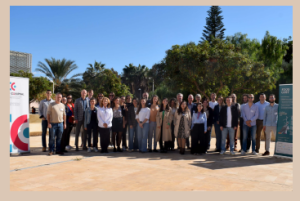
FOODCoST brings together a diverse, multi-actor consortium coordinated by Wageningen Research, with 20+ partners from across Europe: universities and research institutes, SMEs, and consultancies, farmer and agri-food organisations, and policy and civil-society networks. This mix connects science with real value chains to co-create, test, and scale true cost accounting tools and practical guidance.
PROJECT LEAD PROFILE
Wageningen University & Research (WUR) and its Wageningen Social & Economic Research Institute coordinate FOODCoST. WUR is a leading hub for agri-food and sustainability science, combining research, education, and multi-stakeholder partnerships. The institute delivers economic, behavioural, and policy analysis for sustainable food systems, including a dedicated true cost accounting programme to quantify externalities and inform business decisions and public policy.
PROJECT CONTACTS
Email: info@foodcost-project.eu
Web: foodcost-project.eu
Facebook: @FOODCoSTEU
LinkedIn: /company/foodcosteu
X: @FOODCoSTEU
YouTube: @FOODCoSTEU
FUNDING
This project has received funding from the European Research Council (ERC) under the European Union’s research and innovation programme (Grant agreement No. 101060481).
Funded by the European Union. Views and opinions expressed are, however, those of the author(s) only and do not necessarily reflect those of the European Union or the ERC. Neither the European Union nor the granting authority can be held responsible for them.