
Michael Magee
How a continent-wide effort is rebuilding Europe’s taxonomic capacity and why it matters for the restoration of nature.
PhD student Marco Tolve, from the University of Turin, climbs above 2200 metres into the rocky debris of the Mercantour–Alpi Marittime Natural Park. He is looking for a wolf spider—Vesubia jugorum—an IUCN-listed endangered species that lives only here, in the alpine borderlands between France and Italy. Late spring snow has buried most of the terrain, turning the collection process into a treasure hunt. Eventually, his team collects 71 female spiders from 15 locations. They’ll be taken to the lab for morphological measurements and preserved for genetic analysis. This taxonomy is: interdisciplinary, demanding and foundational to our understanding of biodiversity; and Europe has a shortage of people who can do it.
Crisis within a crisis
We are living through one of the most dramatic losses of biological diversity in Earth’s history. What is less often said is that our ability to even measure that loss—let alone reverse it—depends entirely on a science that itself is in crisis. Taxonomy is the science of naming, describing, and classifying life. It is how we connect the dots in nature. Despite 300 years of effort, fewer than 20% of the world’s estimated 8 million plant, animal, and fungal species have been formally described, classified, and named. With the current extinction rate of species, estimated to be 100 to 1000 times the background extinction rate, species are lost forever before they can be described.
Human societies rely on diverse and resilient ecosystems because all of our food, much of our medicine, and the oxygen we breathe ultimately come from nature. Nature also underpins the economy. The European Central Bank estimates that 72% of companies are highly dependent on at least one ecosystem service. With around one million species now threatened with extinction, ecosystem services are less resilient to pressure. Conservation policy, biosecurity, supply chains, and climate adaptation all depend on knowing which species exist, where they are, and how they are changing.
Taxonomy is essential for halting and reversing biodiversity loss and restoring nature. You cannot manage what you cannot name.
However, we have a global shortage of taxonomic expertise. Retirements outpace recruitment, institutional support and funding have diminished, and classical training is not as prioritised as it once was. As a result, many taxonomic groups and geographical regions remain poorly studied, affecting our ability to qualify conservation policies, environmental assessments, and measures of biodiversity.
This is the taxonomic impediment. Limits to taxonomic capacity have direct consequences for our ability to accumulate environmental knowledge. Nature Restoration regulation, biodiversity monitoring and ecological datasets rely on accurate species identification, and more data is needed for effective conservation policy. TETTRIs was conceived as a response to this challenge.
The TETTRIs approach
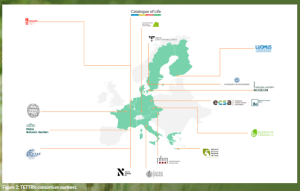
TETTRIs is a €6 million Horizon Europe project coordinated by the Consortium of European Taxonomic Facilities (CETAF), bringing together 17 partner institutions across 11 countries. Now in its final month, the project is ready to share its knowledge.
From the beginning, the team coordinated investment in community, knowledge systems, and digital networks. The project’s core partners are some of Europe’s largest natural history museums and botanical gardens, which house the front line of taxonomists. The team utilised novel research tools and methods built from real practice and tested in real conditions.
TETTRIs evolved as a test-bed for integrative taxonomy: combining molecular tools with classical morphology, developing digital infrastructure to make data interoperable, training new specialists, and connecting the scientific community to wider society through citizen science and public engagement. From this work, 3 pathways emerged, each tested and validated through the project’s 12 cascade-funded satellite projects that brought the wider European community under the TETTRIs umbrella.
“The satellite projects showed that best practices can scale—but only when they are tested in real contexts, by real practitioners, facing real constraints.”
— Ana Casino, CETAF Executive Director
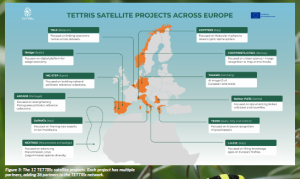
The cascade funding call, launched in the second year of the project, invited the broader European taxonomic community to apply for grants to test TETTRIs’ approaches in their own settings. The response showed the strength of the European taxonomic community and their readiness to get involved when presented with the framework and resources. A total of 54 proposals arrived, of which 12 projects were funded, adding 36 partner institutions to the network and extending the project’s reach from the Canary Islands to Norway.
The satellites: cascade funding helped validate and scale
The 12 satellite projects were the test-bed for TETTRIs. Each took a different aspect of the taxonomic challenge and worked with it in the field. Together, they validated what the core project had developed and revealed what still needed work.
Some tackled the crisis of hidden diversity. The CRYPTERS project in the Mercantour-Alpi Marittime Natural Park used genetic markers to determine whether the endangered wolf spider Vesubia jugorum is a single species or several cryptic species—a question with direct conservation consequences, since different cryptic species may have entirely different habitat needs. The NEXTRAD project assembled over 1500 specimens of Macaronesian Lotus plants, including one from a species now extinct in the wild, to apply genomic tools to a plant group in which recent rapid evolution has made traditional identification unreliable.
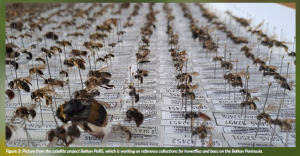
Others confronted the practical reality of Europe’s existing collections. ARCADE in Portugal found a new bee species recorded in the country for the first time—hiding in collections that had simply never been properly audited. INC-STEP in Spain validated over 25 000 insect specimens from 399 species across 5 collections and developed protocols for remotely screening high-resolution images of specimens, reducing the burden on scarce expert taxonomists for years to come. Balkan PolliS aligned 9 national pollinator sub-collections across Serbia, Greece, Slovenia, and Montenegro with shared GBIF standards—for the first time making cross-border pollinator data from this biodiversity hotspot meaningfully comparable.
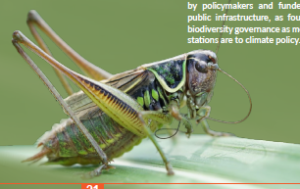
The citizen science satellites showed what public engagement looks like when it is designed around real science rather than outreach metrics. In Norway, FOOTPRINTS-CITSCI invited the public to photograph animal tracks in winter snow, building a machine-learning identification tool on a foundation of validated training data. In Italy, L.U.C.E. is training early-career researchers to document the country’s poorly understood firefly species, combining molecular analysis with public engagement. TEOSS brought over 55 participants together at 2 international workshops to record grasshopper and cricket calls—documenting endemic species acoustically for the first time and feeding directly into AI model development.
What the satellites collectively demonstrated was something the project had hoped but could not assume: that best practices developed in a consortium setting can be taken up, adapted, and made to work by independent teams facing their own constraints. Cascade funding was a novel mechanism in TETTRIs, and it is recommended this inclusive form of building partnerships is integrated into more projects.
Read the final reports of the satellites at tettris.eu/awarded-projects.
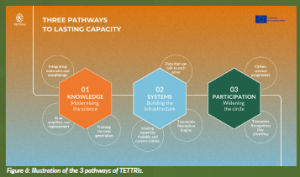
Three pathways to lasting capacity
1. Knowledge: modernising the science
Integrating molecules and morphology
Traditional taxonomic description is slow: from the discovery of a new species to its formal naming can take up to 10 years. DNA barcoding and genomic tools compress that timeline dramatically. TETTRIs promoted the integration of molecular methods with classical morphology throughout its work—enabling faster, more robust species delimitation across the groups that matter most. This is of particular importance for ‘dark taxa’—those species not readily identifiable through the naked eye, such as soil meiofauna and small insects.
One key output is SPART Explorer, a bioinformatics tool supporting species delimitation workflows—helping researchers determine where one species ends and another begins. Practical guidelines for using genomics in taxonomy have been developed and tested, creating resources that any European institution can adopt.
AI as amplifier, not replacement
TETTRIs developed machine-learning models for identifying species from images and sound—for land snails of the genera Vertigo, and for grasshopper species (Orthoptera) by their calls, as well as for mammal track identification from photographs. All 3 pointed to the same conclusion: AI identification tools work in direct proportion to the quality of the expert knowledge underlying them.
The satellite project TrAILSID, based at the Leibniz Institute in Hamburg, built photo-identification models for 17 European Vertigo snail species. Initial tests showed strong accuracy where reference images were high-quality and expertly validated. TEOSS, working across the Mediterranean peninsulas, recorded nearly 100 Orthoptera species at 2 workshops, contributing directly to the acoustic database that will train sound-recognition models. In Norway, FOOTPRINTS-CITSCI is using AI to identify mammal species from snow tracks submitted by citizen scientists. The project is guided by a clear design philosophy, articulated by Wouter Koch, senior adviser at the Norwegian Biodiversity Information Centre (NBIC): “Engagement and biological relevance, not fancy technology, remains the objective.”
In these 3 examples of AI use, human experts are essential for verifying observations and training the technology. AI and machine learning enable citizen scientists to scale up biodiversity data collection. But taxonomic experts are still essential behind the scenes.
Training the next generation
None of this matters if there are no taxonomists left to do the work. TETTRIs invested heavily in training—developing blended advanced courses, e-learning modules, mentorship networks, and field schools across Europe, all coordinated through the CETAF Distributed European School of Taxonomy (CETAF-DEST).
The satellite SoilMATs built a deliberately multiplying model: training 6 ‘future local trainers’—researchers who will in turn train 20 others across Italy, Germany, and Czechia—in the identification of nematodes, rotifers, and tardigrades, among the most ecologically vital and least-studied organisms in European soils. Project coordinator Roberto Guidetti, from the University of Modena and Reggio Emilia, describes it: “Throughout my career, I’ve noticed a lack of generational change among taxonomic experts for certain groups. I wanted to create an opportunity for scientific and personal growth for future taxonomists.”
INC-STEP in Spain trained curators to photograph insect specimens at high resolution, allowing expert taxonomists to pre-screen 40 000 specimens across 5 collections remotely—a practical solution to the scarcity of senior specialists that extends their reach without requiring constant travel.
L.U.C.E. in Italy is training at least 8 early-career researchers specifically in the identification of firefly species. Transferring taxonomic knowledge is essential, and best practices for training are published on CETAF-DEST.
2. Systems: building the infrastructure
Expertise without infrastructure fragments. One of the central lessons of the past 2 decades is that isolated experts produce isolated knowledge. TETTRIs invested in the connective tissue.
Data that can talk to each other
European natural history collections hold millions of specimens, but much of this knowledge remains inaccessible—held in databases that cannot communicate with each other, named under conventions that vary by country, institution, and decade. Around 1 in 10 species names fail to match perfectly across large datasets, creating ‘data fog’ that undermines large-scale assessments and policy.
TETTRIs developed the Taxonomic Resolution Engine, enabling species databases to communicate across borders and domains, and the Check My Name tool, supporting consistent use of scientific names. The satellite TNLS (Taxonomic Name Linking Services), led by the Flanders Marine Institute and the Royal Botanic Garden Edinburgh, is building stable species identifiers—persistent IDs that follow a species through name changes and taxonomic revisions—and a notification system to alert researchers when changes affect their datasets. Balkan PolliS aligned 9 national pollinator sub-collections with GBIF standards for the first time. ARCADE in Portugal created a unified indexing workflow that other institutions across the country can adopt. iSedge has built a live global database for the sedge family at cyperaceae.org.
Building on these foundations, TETTRIs calls for a coordinated European annotation campaign embedded in existing research-data infrastructures. Such an effort would strengthen the evidence base for biodiversity-related decision-making.
Making expertise findable and careers viable
TETTRIs created an expert marketplace—a platform connecting taxonomists and taxonomic services across Europe, making specialist knowledge visible and accessible to anyone who needs it. Taxonomic expertise needs in public, private, and policy sectors were analysed in so-called Stakeholder-Labs. One idea was a taxonomist-in-residence programme, where taxonomists, especially early-career taxonomists, are embedded in business and public organisations. As supply chains, sustainability reporting, and biosecurity increasingly require species-level knowledge, this model creates new roles for early-career researchers while giving organisations the biological grounding their assessment work demands.
3. Participation: widening the circle
Taxonomists are very good at communicating with each other and sharing knowledge. TETTRIs worked to make knowledge sharing more inclusive by building relationships and public understanding that enable sustained investment.
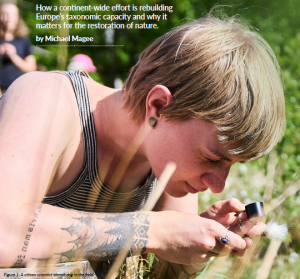
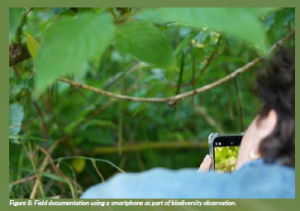
Citizen scientists can generate valuable data when given clear standards, good tools, and meaningful expert validation. Large-scale citizen science programmes were deployed in Denmark. Bioblitz were carried out in Denmark, Sweden, Belgium, and Greece. FOOTPRINTS-CITSCI in Norway embedded biodiversity monitoring in winter walking and ski trails. TEOSS workshops brought enthusiasts and professionals together to record grasshopper sounds. INC-STEP is developing public-facing identification keys for Spain’s pollinators. One TETTRIs engagement initiative combined biodiversity observation with music composed alongside nature—a novel approach that proved effective at building genuine emotional connection to the natural world, particularly among young people not typically involved in citizen science. This was piloted in Denmark, with approaches subsequently adopted in Greece and Germany.
TETTRIs established May 23rd as Taxonomy Recognition Day. The birthday of Carl Linnaeus, and the day after the UN observed International Day for Biological Diversity.
But how can we know about biodiversity without knowing the names of species? How can we make conservation policies if we don’t know what we have in nature?
On 23 May 23 a campaign brings awareness of taxonomy as the science that allows us to understand and communicate species.
TETTRIs invites the public to take part by sharing a picture of a plant or animal, uploading it on social media with its scientific name and the hashtag #NameItToSaveIt.
To find the name, there are apps that help with this, such as observation.org, iNaturalist or in Denmark, Arter.dk. When you upload a picture to these apps, not only do you find the name, but that picture becomes a data point in mapping biodiversity.
Biodiversity cannot be understood or protected without first knowing what it consists of.
Join the Name It To Save It campaign here tettris.eu/trd
A blueprint for what comes next
TETTRIs was always conceived as the beginning of something. Its blueprint—a tested, validated set of recommendations for building taxonomic capacity across Europe—will be published in May 2026 at tettris.eu. The work continues in TETTRIx, a successor initiative that carries these principles further with much of the same, but a broader community.
Central to all the recommendations is a shift in how taxonomy is understood by policymakers and funders: essential public infrastructure, as foundational to biodiversity governance as meteorological stations are to climate policy.
What institutions can do now
- Embed advanced taxonomy modules in curricula, recognising that career pathways for newly trained taxonomists are growing.
- Adopt the CETAF-DEST blended course and mentorship framework, validated through SoilMATs, INC-STEP, and L.U.C.E.
- Integrate the Taxonomic Resolution Engine and Check My Name into data workflows.
- Map gaps in existing reference collections before digitising, as these gaps are consistently larger than assumed, particularly for dark taxa.
- Build open-access digitised collections through DiSSCo (dissco.eu).
- Partner with citizen science networks via the European Citizen Science Association (ngo).
- Develop AI tools on properly curated, expert-validated reference datasets.
- Use cascade funding to bring more institutions and NGOs into the network, building on the satellite model that empowered the community.
- Pilot Taxonomist in Residence programmes as entry points for early-career researchers.
- Treat taxonomy as shared infrastructure, not a collection of isolated experts.
The 10 policy briefs can be found at tettris.eu/publications
It starts with a name
Marco Tolve, returning from the alpine spider survey in the Mercantour, put it simply: “It is awesome to have the opportunity to visit these places and investigate the history of this spider. Learning from the past is fundamental to preserve it in the future.”
Taxonomy is 300 years old, and in that time, it’s undergone pivotal changes. Modern taxonomy is integrative, evolving, and as relevant as ever.
As Europe moves to restore nature, taxonomy must be recognised as foundational infrastructure. Biodiversity targets, nature restoration, sustainable finance, and biosecurity all depend on knowing what species exist, where they occur, and how they are changing over time.
TETTRIs demonstrates that modern taxonomy is no longer confined to museum drawers or specialist journals. It is a living system that combines classical expertise with digital tools, genomics, AI, and broad participation. Investing in this system is a prerequisite for effective policy, resilient economies, and informed conservation strategies.
Every species has a story—but without a name, that story may never be told. The TETTRIs project is a coalition of Europe’s leading natural history museums and botanical gardens. We are calling on the world to celebrate taxonomy—the science that names, classifies, and describes life on Earth. #NameItToSaveIt
About TETTRIs
TETTRIs is a €6 million Horizon Europe project (grant agreement No. 101081903) coordinated by the Consortium of European Taxonomic Facilities (CETAF), bringing together 17 partners across 11 countries. The project blueprint will be published at tettris.eu in May 2026.
PROJECT SUMMARY
Taxonomy is the science of naming, describing, and classifying life. It is vital in tackling biodiversity loss. TETTRIs strengthens Europe’s capacity by training new experts, developing innovative tools, and engaging communities. The project supports the EU Nature Restoration Law and global biodiversity targets, ensuring we know what species exist, where they are and the connections that bind life on Earth.
PROJECT PARTNERS
https://tettris.eu/consortium-partners
PROJECT LEAD PROFILE
With over 5000 scientists in 27 countries, CETAF is Europe’s network of biological and geological collections. The consortium is a leading European voice for taxonomy and systematic biology. With a secretariat based in Brussels, CETAF actively influence policy for the benefit of biodiversity in Europe.
PROJECT CONTACTS
Marta Leon Monedero, Project Manager
Email: marta.leon@cetaf.org
Michael Magee, Communications Manager
Email: magee@snm.ku.dk
Web: tettris.eu/
BlueSky: bsky.app/profile/tettris.bsky.social
X: @TETTRIsEU
Facebook: @TETTRIsEU
Instagram: @TETTRIsEU
LinkedIn: /company/tettris
FUNDING
This project has been funded by the European Research Council (ERC) under the European Union’s Horizon Europe research and innovation programme (Grant agreement No. 101081903).
Views and opinions expressed are, however, those of the author(s) only and do not necessarily reflect those of the European Union or the ERC. Neither the European Union nor the granting authorities can be held responsible for them.
Figure legends
Figure 1: A citizen scientist identifying in the field.
Figure 2: TETTRIs consortium partners.
Figure 3: Picture from the satellite project Balkan PolliS, which is working on reference collections for hoverflies and bees on the Balkan Peninsula.
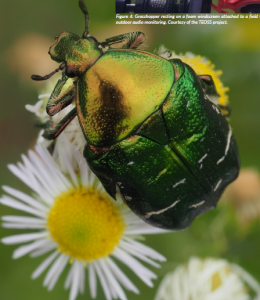
Figure 4: Grasshopper resting on a foam windscreen attached to a field recording microphone during outdoor audio monitoring. Courtesy of the TEOSS project.
Figure 5: The 12 TETTRIs satellite projects. Each project has multiple partners, adding 36 partners to the TETTRIs network.
Figure 6: Illustration of the 3 pathways of TETTRIs.
Figure 7: Pipette dispensing liquid into a microcentrifuge tube held in a laboratory rack during sample preparation.
Figure 8: Field documentation using a smartphone as part of biodiversity observation.
Figure 9: Overview of Taxonomy Recognition Day and the #NameItToSaveIt campaign, including date, participation model, reach, and purpose.
Figure 10: Meloe violaceus. Credit: Amelie Höcherl.
Figure 11: Meloe violaceus. Credit: Amelie Höcherl.