
The need: reducing agrochemicals and microplastics in agriculture
Agrochemicals: widespread use and impacts
Agrochemicals—including fertilisers, pesticides (Plant Protection Products, PPPs), and biocides—are widely used in agriculture to sustain crop productivity. In the European Union, fertilised agricultural land covers approximately 122.9 million hectares. In 2023, agrochemical consumption remained high, with fertiliser use reaching 8.3 million tonnes (Eurostat, 2025).
However, the intensive use of agrochemicals has severe environmental and health implications. These substances contaminate ecosystems, affecting wildlife, water bodies, and food chains, and pose risks to both agricultural workers and consumers. According to the European Commission, eutrophication has been reported in 81% of marine waters, 31% of coastal waters, 36% of rivers, and 32% of lakes across the EU, largely due to excessive fertiliser application (European Commission, 2021). Conventional application methods are inefficient: 40–70% of nitrogen, 80–90% of phosphorus, and 50–70% of potassium in fertilisers remain unabsorbed by plants, leading to volatilisation, leaching, and ecological imbalance (Ravindran et al., 2025). The low recovery rates of applied nutrients by crops indicate the inefficiency of current practices globally, contributing to ecological instability (Bhatt et al., 2025).
In response, significant research efforts have focused on developing advanced delivery systems—such as controlled-release fertilisers (CRFs) and polymer-coated pesticides—that improve application efficiency by modulating release rates and enhancing specificity. These technologies help reduce the volume of agrochemicals applied and mitigate their environmental impact. Nevertheless, many of these systems rely on non-biodegradable, petroleum-based polymers (e.g. polyethylene, ethylene-vinyl acetate), which contribute to long-term pollution (Ravindran et al., 2025).
Agricultural plastics: benefits and environmental burden
Beyond agrochemical carriers, plastics such as mulch films and growth foams are widely used to boost productivity. They are also mostly made of fossil-based or not completely biodegradable plastics, resulting in multiple environmental (e.g. plastic pollution) and socio-economic impacts (e.g. public disapproval, economic costs of removal). Every year, at least 12.5 million tons of agricultural plastics are used globally (FAO, 2021).
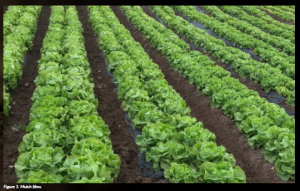
Mulch films (Figure 1) play a crucial role in agriculture by reducing weed growth, water losses, pesticides, fertiliser, and irrigation inputs, while also enhancing plant growth (Campanale et al., 2024). They represent the second largest use of plastic in agriculture, with an estimated annual consumption of 2.5 million tons (FAO, 2021). Traditionally, these films are manufactured from fossil-based plastics, primarily polyethylene. However, their widespread use has raised significant concerns regarding plastic pollution, as recovery is challenging, and residues often accumulate in soils and ecosystems. Their persistence and fragmentation under UV exposure generate microplastics that accumulate in soils (Campanale et al., 2024). It has led to options made from biodegradable/ compostable plastics (e.g. PLA, PBAT, PBSA). However, most of them are based on blends with fossil-based plastics or and their degradation rate varies significantly and is often too slow for a single crop cycle. These blended films don’t fully degrade, leaving residues, and are only ‘biodegradable’ under specific conditions, leading to slower degradation than anticipated in field settings (Graf et al., 2025).
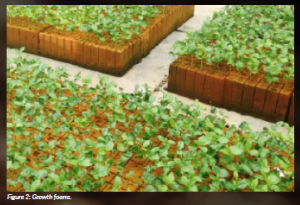
Growth foams (Figure 2) represent another category of agricultural plastics, primarily used in nurseries and modern cultivation systems such as hydroponics, vertical farming, and advanced horticulture. These synthetic substrates provide essential functions—structural support, aeration, and moisture retention—making them particularly valuable in soilless systems where conventional soil is absent (Hachem, Vox, and Convertino, 2023). Typically manufactured from fossil-based polymers such as polyurethane (PU) and polystyrene (PS), these foams offer excellent mechanical performance. However, their non-biodegradable nature poses significant environmental challenges, contributing to microplastic pollution and long-term soil contamination.
PHAntastic solution: bioactive polymers for healthier soils
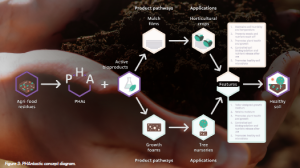
Funded by the European Commission, the PHAntastic project aims to replace widely used agricultural plastics with bio-based and fully biodegradable alternatives derived from polyhydroxyalkanoate (PHA) polymers. These innovative materials are designed not only to substitute conventional plastics but also to act as carriers for active bioproducts—such as bio-based fertilisers and PPPs—eliminating the need for synthetic agrochemicals. By doing so, PHAntastic pursues a dual objective: reducing both plastic and agrochemical inputs in agricultural systems, while safeguarding environmental and human health. The project will develop and demonstrate 2 advanced delivery systems, mulch films and growth foams (Figure 3), progressing from TRL 3–4 to TRL 6, in collaboration with horticultural and fruit tree producers across Southern and Northern Europe (Spain and the Netherlands).
PHAntastic mulch films
Biodegradable PHA-based mulch films for horticultural crops (e.g. lettuce, broccoli) incorporating bio-based fertilisers (e.g. amino acids and hydrolysed proteins from natural sources) and plant growth-promoting rhizobacteria (PGPR).
PHAntastic mulch films will work in 3 stages: (1) supporting growth and protection during growth stages of the plants through a coating containing PHA-microcapsules with active bioproducts for controlled release; (2) promoting plant growth and health through plant growth; and (3) releasing additional active bioproducts in the soil to support soil fertility during PHA biodegradation at the end of its useful life.
PHAntastic growth foams
Biodegradable PHA-based foams for the growth of tree seedlings (citrus and ornamental), containing active bioproducts. PHAntastic growth foams will be embedded with an impregnation solution containing (PGPR) and active bioproducts, offering a moisture-retentive growth medium. Once the trees are transplanted into the soil, PHAntastic growth foams will biodegrade, releasing additional nutrients and microorganisms that favour the next stages of tree growth and contribute to maintaining healthy and productive soils.
Safety and sustainability
Beyond material development, PHAntastic will address safety, environmental sustainability, and socio-economic assessment throughout the entire product lifecycle, following the Safe and Sustainable by Design (SSbD) framework and relevant regulations. The SSbD framework is composed of a design phase and an assessment phase that are applied iteratively as data becomes available.
To reach the proposed objectives, PHAntastic joins a multidisciplinary team, gathering a competitive set of research and industrial experts in PHA characterisation, production and compounding (CETEC, CETEC Biotechnology, Helian Polymers, Chalmers University), and obtention and adaptation of active bioproducts (Probelte); top researchers on soil microbiology and health (CEBAS-CSIC); safety and sustainability specialists in the SSbD, regulatory framework, data management and chemoinformatics (IDEA, ARCHA); experts in social sciences and humanities (Kveloce); exploitation, dissemination and communication experts (RTDS, REVOLVE); and horticultural and fruit (PROEXPORT, AVASA, GREENPORT, VERTIFY).
https://www.youtube.com/playlist?list=PLK1DMovauS8OVNUHVscb2ebGts1RuEkYD
References
Bhatt, R. et al. (2025) ‘Sustainable strategies to limit nitrogen loss in agriculture through improving its use efficiency—aiming to reduce environmental pollution’, Journal of Agriculture and Food Research, 22, 101957. Available at: https://doi.org/10.1016/j.jafr.2025.101957.
Campanale, C. et al. (2024) ‘A critical review of biodegradable plastic mulch films in agriculture: Definitions, scientific background and potential impacts’, TrAC Trends in Analytical Chemistry, 170, 117391. Available at: https://doi.org/10.1016/j.trac.2023.117391.
European Commission (2021) Report on the implementation of Council Direc-tive 91/676/EEC concerning the protection of waters against pollution caused by nitrates from agricultural sources based on Member State reports for the period 2016–2019. COM(2021) 1000 final. Available at: https://eur-lex.europa.eu/legal-content/EN/TXT/?uri=CELEX:52021DC1000.
Eurostat (2025) ‘Use of mineral fertilisers in the EU continues to decline’. Eurostat News. Available at: https://ec.europa.eu/eurostat/web/products-eu-rostat-news/w/ddn-20250704-3.
FAO (2021) Assessment of agricultural plastics and their sustainability: A call for action. FAO, p. 160. Available at: https://doi.org/10.4060/cb7856en.
Graf, M. (2025) ‘Biodegradable mulch films exhibit slower-than-expected degradation with negligible effects on soil microbial communities’, Journal of Hazardous Materials, 498, 139871. Available at: https://doi.org/10.1016/j.jhazmat.2025.139871.
Hachem, A., Vox, G. and Convertino, F. (2023) ‘Prospective scenarios for addressing the agricultural plastic waste issue: Results of a Territorial Analysis’, Applied Sciences, 13, 612. Available at: https://doi.org/10.3390/app13010612.
Ravindran, A. et al. (2025) ‘Advancements and challenges in controlled-release fertilisers: An approach to integrate biopolymer-based strategies’, Industrial Crops and Products, 233, 121349. Available at: https://doi.org/10.1016/j.indcrop.2025.121349.
PHA-based iNnovative agriculTurAl Solutions to deliver bio-based ferTIlisers and plant protection produCts
PROJECT SUMMARY
The PHAntastic project is driving the sustainable transformation of agriculture by tackling agrochemical dependency and plastic pollution. It will develop 2 innovative delivery systems—mulch films and growth foams—based on polyhydroxyalkanoates (PHAs), a family of bio-based, fully biodegradable polymers. These solutions incorporate active bioproducts to reduce fertiliser and pesticide use, mitigate microplastic pollution, and enhance soil health.
PROJECT PARTNERS
The PHAntastic consortium unites 15 partners from 7 European countries, offering expertise from bioplastic production to end users for field validation. Members include CETEC (Coordinator), CETEC Biotechnology, CEBAS-CSIC, PROBELTE, PROEXPORT, AVASA (Spain); CHALMERS
University (Sweden); Helian Polymers, Greenport, Vertify (The Netherlands); ARCHA (Italy); IDEA (Bulgaria); RTDS (Austria); REVOLVE, KVELOCE (Belgium).
PROJECT LEAD PROFILE
The PHAntastic project is coordinated by Dr Carmen Fernández Ayuso, Head of Coordination and R&D Management at CETEC, the Plastics and Footwear Technology Center of the Region of Murcia. A Chemical Engineering PhD with over 15 years in plastics, Dr Ayuso strategically aligns research efforts with future market needs and technological advancements.
PROJECT CONTACTS
Carmen Fernández Ayuso
Email: coordination@phantasticproject.org
Web: phantastic-project.eu
LinkedIn: /company/phantastic-project
FUNDING
Co-financed by the European Union under grant agreement No. 101130073.
Views and opinions expressed are, however, those of the author(s) only and do not necessarily reflect those of the European Union or the European Health and Digital Executive Agency (HADEA). Neither the European Union nor the granting authority can be held responsible for them.
FIGURE LEGENDS
Figure 1: Mulch films.
Figure 2: Growth foams.
Figure 3: PHAntastic concept diagram.